
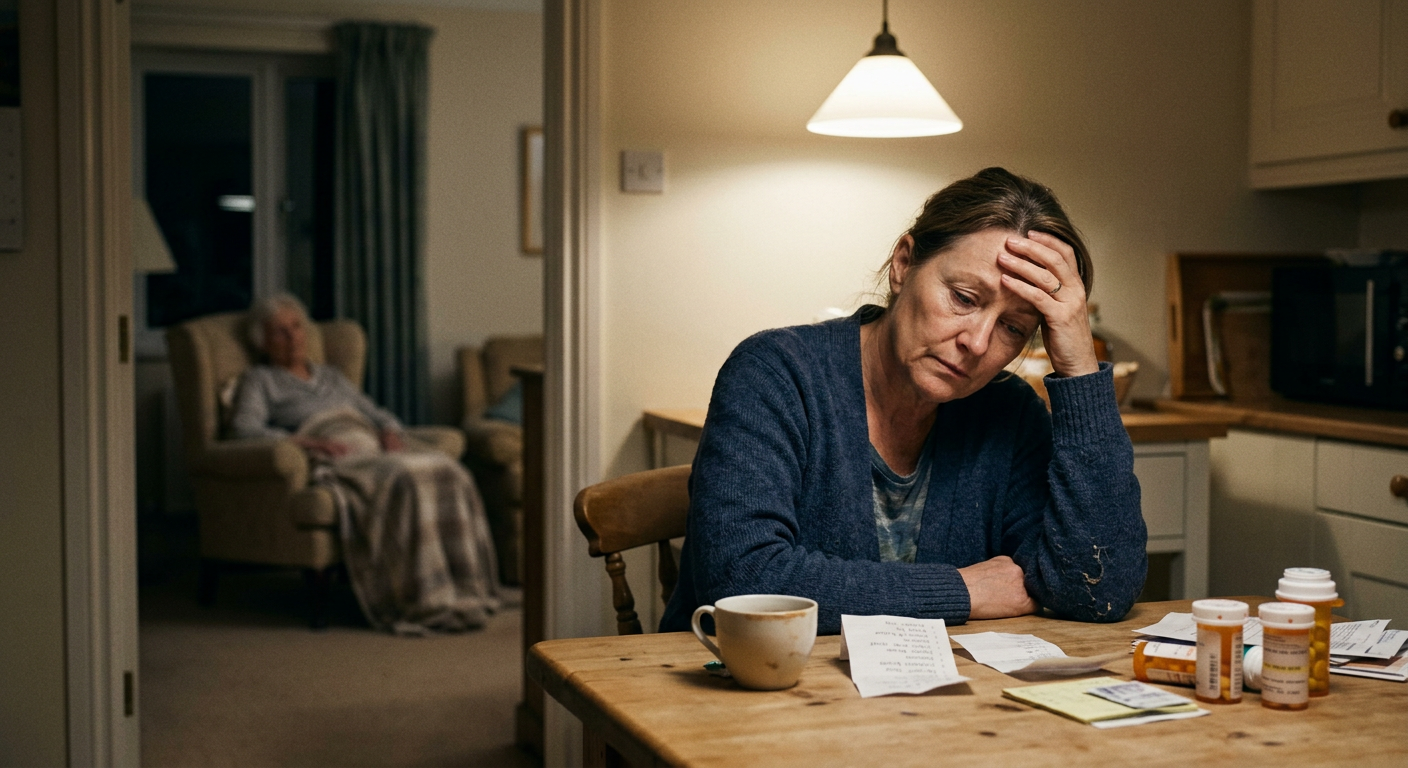
There are feelings that come with hospice caregiving that most people never say out loud. Not because they are rare. But because people are afraid of being judged for having them.
We hear these feelings all the time. From good people. From loving people. From people who are giving everything they have to care for someone they love. And we want you to know: every one of these feelings is normal.
Is It Normal to Wish It Was Over?
At some point, many caregivers have this thought: when is this going to end?
It does not mean you want your loved one to die. It means you are exhausted. It means you have been carrying something very heavy for a long time. It means you are human.
Caregiving at end of life is not a short sprint. It can go on for weeks or months. The physical work is hard. The emotional weight is harder. The not knowing—how long, how much worse, what comes next—wears you down in ways that are hard to explain to anyone who has not been through it.
Some people think this thought every day. Some think it once and feel terrible about it for weeks. Either way, it does not make you a bad person. It makes you a tired one.
What If You Resent Being the Caregiver?
Not everyone chooses to be a caregiver. Sometimes you are the one who lives closest. Sometimes you are the one who does not have a job that lets you say no. Sometimes the rest of the family just assumes it will be you. And sometimes you say yes because no one else will—not because you wanted to.
That can create a deep resentment. Not just toward the siblings or family members who are not helping. Toward the situation itself. Toward the fact that your life has stopped while everyone else’s keeps going.
And sometimes the resentment is toward the patient. That is the one people really do not say out loud.
Maybe your relationship with this person was never easy. Maybe there is old hurt that was never resolved. Maybe you are caring for a parent who was not a good parent, or a spouse who was not a good partner. You can love someone and still carry anger toward them. You can care for someone and still wish you did not have to.
Sometimes the resentment comes from watching someone suffer from an illness that feels connected to choices they made. A lifetime of smoking. Heavy drinking. Years of ignoring their doctor. You may catch yourself thinking: you did this to yourself. And now I am the one paying for it.
That thought does not make you cruel. It makes you honest. And it does not cancel out the care you are giving. You are still showing up. That matters.
What If You Feel Ready for Them to Go?
This is the one that really scares people. The thought: I’m ready for them to go.
It can come after a long decline. It can come after watching your loved one suffer through pain, confusion, or agitation that nothing seems to fix. It can come after weeks of no sleep, no break, and no end in sight.
Being ready for someone to die is not the same as not loving them. In fact, for many caregivers, it comes from love. You do not want them to suffer anymore. You can see that this is no longer living—it is enduring. And you are ready for the suffering to stop. For them and for you.
Is It Normal to Feel Relief After a Hospice Death?
When your loved one finally dies, you may feel relief. Real, deep relief. The kind that hits you in the chest the moment you realize it is done.
And then, for most people, the guilt comes right behind it.
How can I feel relieved that someone I love just died? That question can eat at you for a long time if you let it.
Here is the truth: relief does not mean you are glad they are dead. It means the hardest thing you have ever done is finally over. The suffering—theirs and yours—has stopped. Your body and mind are letting go of a burden that has been crushing you.
Relief after a long, difficult death is one of the most common feelings in hospice. Nurses and social workers hear it from families every day. It is not a sign that something is wrong with you. It is a sign that you carried something very heavy and your body knows it can finally put it down.
Why Do Caregivers Keep These Feelings to Themselves?
Many people carry these feelings in silence. They do not tell friends. They do not tell family. They are afraid of being judged. They worry that if they say “I was ready for them to go” or “I felt relieved when they died,” people will think they did not love the person enough.
That is not true. These feelings do not mean there was a lack of love. They mean there was a lot of love—and a lot of pain. The two are not opposites. They live right next to each other.
If you need to talk about these feelings, your hospice social worker is a safe place to start. They have heard all of it before. They will not judge you. They will not think less of you. They will understand.
Hospice bereavement services are also available after your loved one passes. Counseling. Support groups. A space to say the things you have been holding in. These services last for about 13 months after the death. Use them if you need them.
You Loved Them. That Is Clear.
The fact that you are reading this—that you are even thinking about whether your feelings are okay—tells us something important about you. You care. You cared the whole time. Through the hard days and the impossible ones. Through the thoughts you are ashamed of and the ones you are proud of.
All of it is part of this. The love and the exhaustion. The tenderness and the resentment. The grief that started before the death and the relief that came after.
You are not a bad person for having these feelings. You are a person who went through something very hard and came out the other side still caring enough to wonder if you did it right.
You did.